Tuesday, January 30, 2007

An offer I can't refuse


Why are garage sales called "garage sales" yet they rarely take place in the garage?

I recently came across an advertisement for a garage sale that said "What would you pay for this?" No item came with a price tag attached to it; buyer's were the one who decided how much to pay for it. There was no haggling or negotiating. The interesting thing was the person running the garage sale thinks he made more money doing it this way. People paid more for some of the junk than he would have priced it at.

How about marketing a house this way? "Look at the comps then tell us what you'd pay for it. All reasonable offers will be considered."

What do you think?

I don't think a seller would go for it, but it sure is an interesting thought...

Monday, January 22, 2007

Marketing for the new generation


Give me your best marketing pitch and tell me why it works.

I've had to get a little creative with my listings. It seems every listing agent has a website (www.123Main.com) for their listings these days, and some even have a virtual tour. But in this here "Information Age" my clients want more. Something different. Something that "tells it like it is."

I was checking out YouTube one afternoon and came across a video of this guy who was taking the viewer on a video tour of his neighborhood. Then it hit me. Why not do the same thing for my listings? So I did a quick search and realized that very few agents were doing this. Seize the day!

I took my little PowerShot camera, turned it on video mode, and did an unedited walking tour of the house. It was raw, uncut, and REAL. You could hear everything from the traffic on the street to the clicking of my heels on hardwood floors. Here is a sample:

http://www.youtube.com/watch?v=G0QFMqurAk0

Whaddya think?

So I did it again on another listing. This time, something amazing happened! The Contra Costa Times found my YouTube video via CraigsList. They wanted to write an article on what I was doing. Here is a link to that:

http://www.contracostatimes.com/mld/cctimes/business/16220381.htm

Two days later, KCBS AM740 calls up and wants to do an interview to air on the radio. Wow! Ok, why not?

http://podcast.medianext.com/stations/kcbs/media/mpeg/Real_Estate_Agent_Hip_To_YouTube-1166034480.mp3

So then...KRON 4 calls! Ok, this is getting a little crazy. It seems I am on to something here. Click here to see me on the 6:00 news, Dec. 23, 2006:

http://www.youtube.com/watch?v=Py1RLRYzgcs

But wait, NBC 11 wants to do a feature story on what I have been doing.

Creative marketing? You betcha! So why does this work? It's new, it's hip, and it sells. Just ask the buyers of my latest listing.

Friday, January 05, 2007

Where will the market go in 2007?


This just in...California, on average, will post a decline in appreciation. It was bound to happen: what goes up, must come down. But just how far down are we talking?

It depends on who you ask.

The California Association of Realtors believe the median home price in California will decline 2% to $550,000 in 2007 compared with $561,000 for 2006; in addition, sales are projected to decrease 7 percent to 447,500 units, compared with 481,200 units in 2006.

The economist with the brightest outlook, Scott Anderson of Wells Fargo & Co., says housing prices will rise next year, maybe by as much as 5 percent.

On the other end of the spectrum, consultant Christopher Thornberg of Beacon Economics says he doesn't expect any significant appreciation until 2011 at the earliest.

David Lereah, chief economist for NAR, expects a moderate upward bounce after the cooling trend of 2006. The size of the bounce will be heavily dependent on how high interest rates rise and their impact on job creation.

Hmmm...so who is right and who is wrong? We will have to wait and see.

Here is what I do know:

The Bay Area as a whole is still strong. We live in one of the most eclectic, exciting and friendly places in all of California. People still want to live here. We have the best restaurants, universities, and recreation (I still live with the hope that I can add the 49ers back into this list). Yes, the market here has changed. Homes that are well priced are still receiving multiple offers, but not as many as a year ago. Many homes are sitting on the market longer, receiving one or no offers, and sellers are faced with having to reduce the price. The good news is that this shift in the market, along with historically low interest rates, makes for a great market for buyers. And how about investors? Perhaps there will be a resurgence...

Stay tuned.

Thursday, December 21, 2006

Top 10: Real Estate Reading 2007


Give one as a gift or curl up on a couch with one. Here is the San Francisco Chronicle's top real estate books of the year.

1. "Trump Style Negotiation" by George Ross. This book offers insights into Donald Trump's big-thinking negotiating style.

2. "Buy Even Lower" by Scott Frank and Andy Heller. Aimed at investors. This book shows how to buy single family houses targeted at below-market prices.

3. "The Automatic Millionaire Homeowner" by David Bach. Shows how home ownership can lead to wealth. If you only read one book on this list, list should be it.

4. "Real Estate Debt Can Make You Rich" by Steve Dexter. For buyers and agents who want to understand the inner-workings of the morgage industry and for investors who need to know how "good debt" can be created to maximize profits.

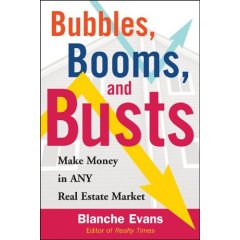
5. "Bubbles, Booms, and Busts" by Blanche Evans. This book explains the signals of local rising, falling or neutral local home sales markets.

6. "Success as a Real Estate Agent for Dummies" by Dirk Zeller. Explains the ins and outs of selling real estate.

7. "Who Says You Can't Buy a Home?" by David Reed. Explains how mortgage lenders look at borrowers in this tell all book.

8. "Everything to Know Before Buying a Co-Op, Condo, or Townhouse" by Ken Roth. The author shares personal experiences and explains pros and cons of this type of ownership.

9. "Confessions of a Real Estate Entrepreneur" by James A. Randel. This book explains how to add value to real estate.

10. "The Reverse Mortgage Advantage" by Warren Boroson. Explains all aspects of senior-citizen reverse mortgages and emphasizes on the potential pitfalls as well as the benefits.

HONORABLE MENTION:

1. "Trump: The Best Real Estate Advice I Ever Received" by Donald J. Trump
2. "Find It, Fix It, Flip It!" by Michael Corbett
3. "Landlording on Auto-Pilot" by Mike Butler
4. "Two years to a Million In Real Estate" by Matthew A. Martinez
5. "Home Buying for Dummies, Third Edition" by Eric Tyson and Ray Brown

Wednesday, November 29, 2006

Heritage Turkey's? Find the history of your home.


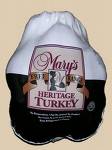
Have you heard of a Heritage Turkey*? Heritage Turkeys are raised free-range on pasture and forage, they develop much stronger legs, thighs, and breasts than industrially-produced turkeys, which have mostly breast meat. The resulting meat from these Heritage birds is very firm and dark in color, as well as being succulent, rich and flavorful. They also come with a sort of "birth certificate" that tells you the entire history of where the bird is from.

Wouldn't it be great if your house came with such a certificate?

Understanding the history of your house is not just about particular dates and people, its also about historical trends and patterns. Which ethnic group settled in your area? When did they arrive? Where did they come from? What local resources were available for construction? What were the prevailing architectural trends of the time? Answering these and many other questions will provide important context before you begin compiling the particular history of your ho use.

Other questions to answer before you get started:
Where is my property located?
When was the property developed and the house built?
Who was the original owner and/or occupant of the property?
Who were the successive owners and/or occupants of the property?
Who was the architect/builder?
How has the property changed over time, and how has the house been altered?
Were the original or successive owners and/or occupants noteworthy?
What was the role of the property in the context of the history and development of the neighbourhood and/or the city in which it is located?

Sources for answers
Neighbourhood and community sources
Look at your deed or tax bill
Talk to previous owners, neighbors, and long-time residents
Visit the local library
Talk to your city's historical society
Consult the Local Architectural Conservation Advisory Committe
Your local archives
Directories, atlases and maps
Assessment rolls
Building permits
Architectural drawings
Pictures and photographs
Land records
Census records
Newspapers

Good luck!

*Heritage Turkeys can be purchased locally from the Pasta Shop on 4th Street in Berkeley, as well as other locations throughout the Bay Area.